+86 13392271119
sales@eprochina.com

News
- News
- Product


Tags: airfryer, airfryeroem, air fryer market, dual basket air fryer, kitchen appliance OEM
Source: 360iResearch, Air Fryer Market - Global Forecast 2026-2032 (198 pages, published September 2026).
According to the Air Fryer Market - Global Forecast 2026-2032 study released by 360iResearch in September 2026, the global air fryer market was valued at USD 1.61 billion in 2025 and is expected to reach USD 1.72 billion in 2026, before expanding to USD 2.65 billion by 2032 — a compound annual growth rate (CAGR) of 7.41% across the forecast period. The 198-page report frames air fryers no longer as a novelty countertop gadget but as a settled category whose demand is shaped by household convenience, interest in lower-oil cooking methods, energy-use considerations, product affordability and the availability of compact appliances.
| Metric | Value | Note for Buyers |
|---|---|---|
| Market size 2025 | USD 1.61 billion | Base-year estimate |
| Market size 2026 | USD 1.72 billion | Roughly +6.8% year on year |
| Market size 2032 | USD 2.65 billion | End of forecast horizon |
| CAGR 2026–2032 | 7.41% | Steady, not speculative growth |
| Incremental value 2026–2032 | USD 0.93 billion | Where new private-label volume lands |
| Report scope | 198 pages, global | Published September 2026 |
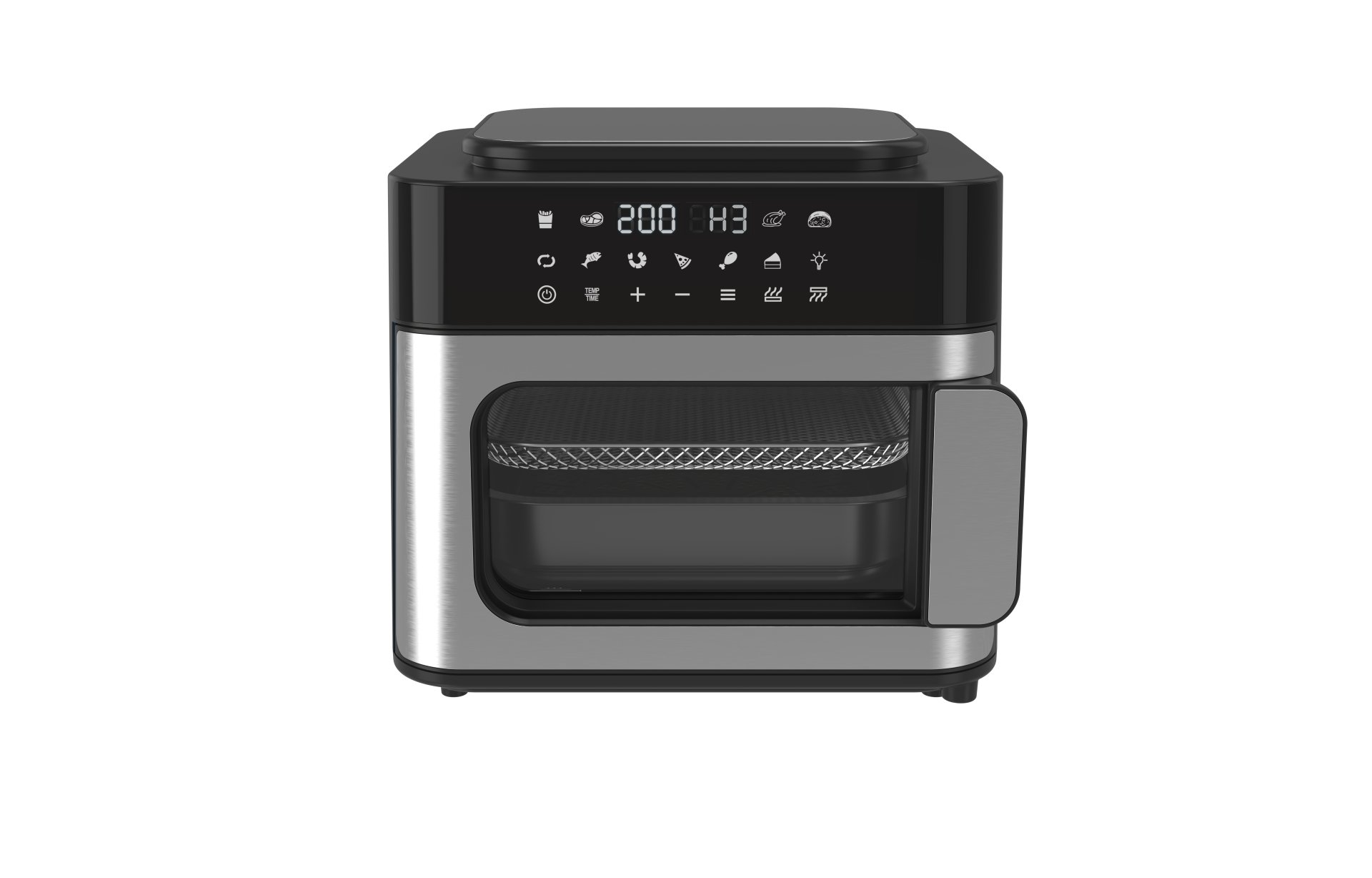
Product differentiation is moving decisively away from headline price. The study identifies dual-basket configurations, larger family capacities, multifunction designs, transparent viewing windows, dishwasher-safe components and improved temperature control as the features reshaping buyer expectations. Sustainability is entering the specification sheet as well: repairability, product longevity, packaging, energy efficiency and responsible materials are now part of how retailers and importers evaluate a supplier. In parallel, artificial intelligence is becoming an enabling layer — personalised recipe recommendations, image-based food recognition, adaptive time and temperature guidance and automated troubleshooting — although the report is explicit that AI cannot substitute for validated cooking performance and dependable hardware.
For importers and distributors, the regional read-out is the most actionable section of the study. Asia-Pacific is the most fragmented, combining dense urban living, compact formats, digital retail and local cuisine adaptation. Within it, India is called out for affordability, efficient service networks and region-specific cooking guidance, while ASEAN markets need compact designs and mobile-first consumer education. The Middle East favours family-oriented cooking capacity, hospitality-grade build and premium finishes — a profile that rewards higher-capacity dual-basket units over entry-level single baskets.
A 7.41% CAGR is a signal of durable, compounding demand rather than a short-lived spike. For buyers planning 2027 programme volumes, the practical read is straightforward: lock specifications that travel well across markets — family capacity, dual-basket flexibility, 220-240V compatibility, verifiable energy performance and a complete certification file — and treat feature density as a regional option rather than a baseline.
Data source: 360iResearch, Air Fryer Market - Global Forecast 2026-2032, published September 2026, 198 pages —
https://www.360iresearch.com/library/intelligence/air-fryer
Compiled by EPRO · 11 September 2026 · This article is a summary and market commentary for B2B importers and distributors; it is not a substitute for the original report.
Keep paying attention to EPRO for more latest news about air fryer.



Privacy Policy | Terms of Service



 English