+86 13392271119
sales@eprochina.com

News
- News
- Product


【行业观察】本文基于奥维云网(AVC)行业数据、二手交易平台公开数据,以及比依股份(603215.SH)、新宝股份(002705.SZ)、小熊电器 2026 年半年度报告等公开信息整理分析。
For most of the last decade, the air fryer story has been a penetration story: how many households could be persuaded to move part of their cooking to hot-air technology. In the first half of 2026, that conversation quietly changed. The constraint on the category is no longer adoption. It is usage.
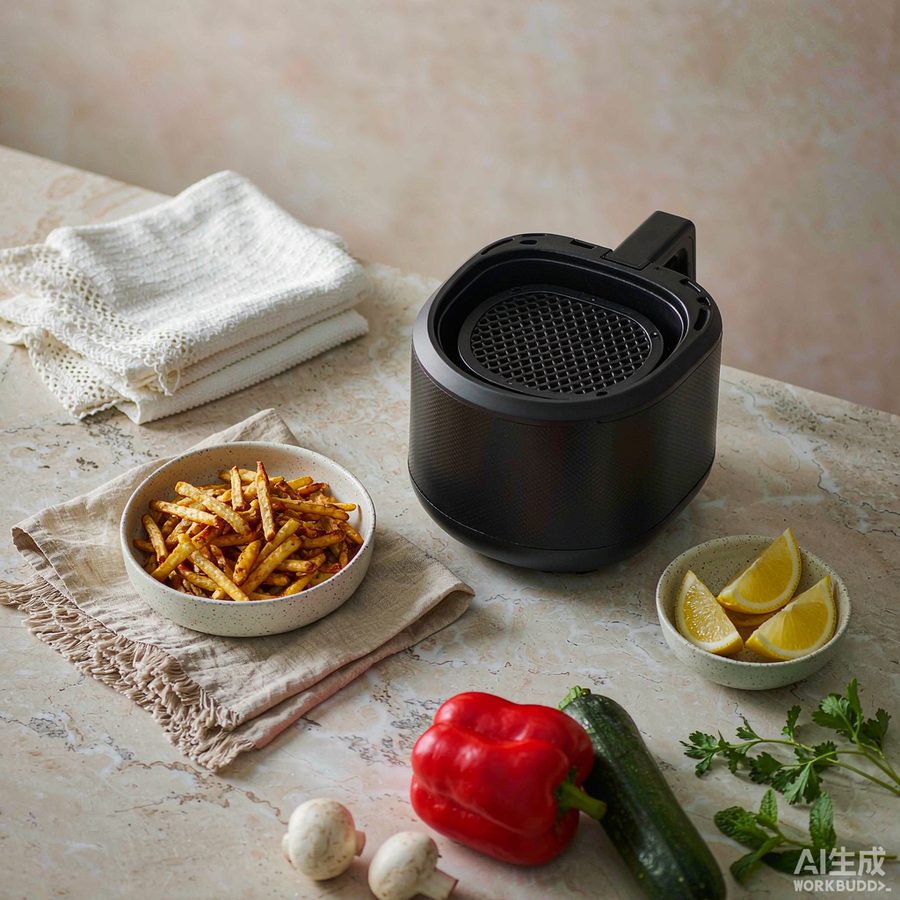
China's kitchen small-appliance market delivered a textbook value/volume divergence in H1 2026: fewer units sold, more money per unit.
| Indicator | H1 2026 (China) | Year-on-year change |
|---|---|---|
| Kitchen small-appliance retail value | RMB 30.26 billion | −4.8% |
| Kitchen small-appliance retail volume | 116.49 million units | −14.6% |
| Average selling price | — | +11.5% |
The pattern is clear. Shoppers bought fewer units and paid more per unit, and they increasingly chose premium over disposable. For brands and importers, that single sentence redefines the product brief.
Second-hand platform data completes the picture. On Xianyu, China's largest consumer resale marketplace, air fryer resale volume grew 170% year-on-year in Q1 2026. Across "as-seen-in-short-video" kitchen categories, idle rates are strikingly high.
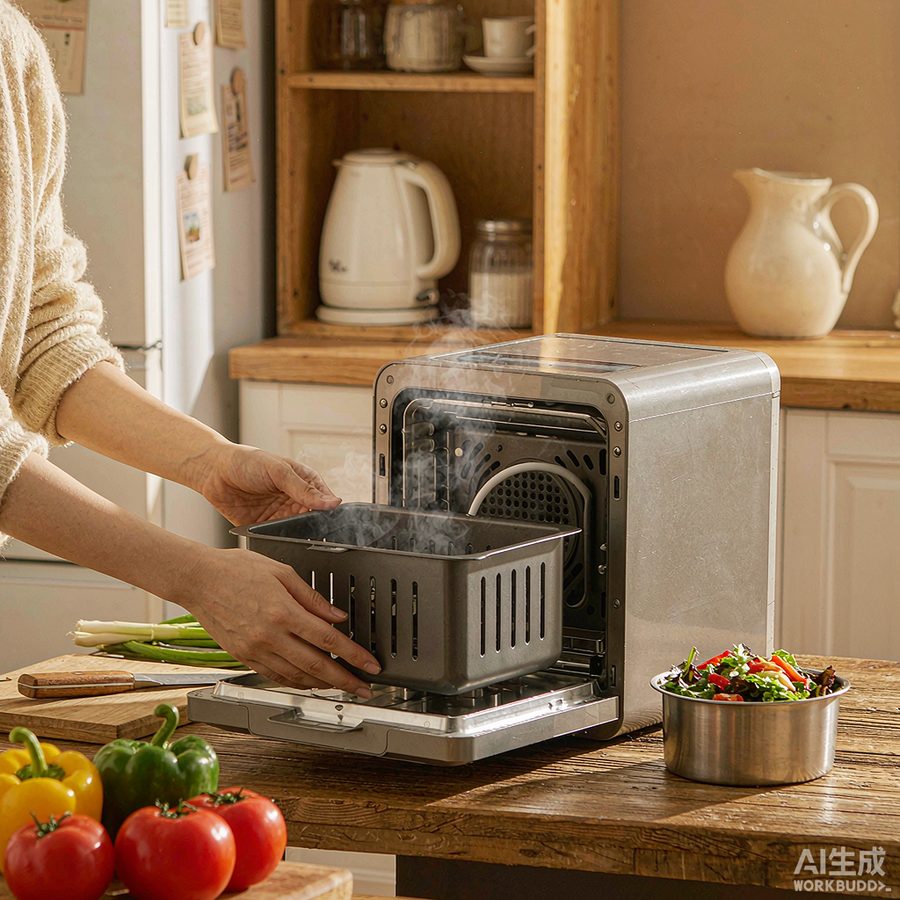
The pain points behind those numbers are consistent in user reports: oil-caked baskets that take too long to clean, accessories that cannot be rinsed under a tap, noise, and recipes that look effortless on screen but rarely survive a Tuesday night. The conclusion is uncomfortable but simple — for this category, product value is realised after the purchase, not at it.
Weak usage feeds back into orders, and China's contract manufacturers felt it in H1 2026.
| Company | H1 2026 revenue | Net profit (YoY) |
|---|---|---|
| Biyi (603215.SH) | RMB 1.078 bn (−6.84%) | RMB −32.57 m (−160.64%) |
| Xinbao (002705.SZ) | RMB 7.420 bn | RMB 136 m (−74.86%) |
| Bear Electric | RMB 2.349 bn (−7.34%) | −41.30% |
Biyi attributed its swing to a net loss to new-project capacity ramp-up, production-line commissioning, rising fixed-cost amortisation and foreign-exchange losses. Notably, capacity investment continued regardless: its Zhongyi smart-manufacturing base is planned for more than 25 million units a year, with the product range extended into environmental appliances, robot vacuums and AR glasses.
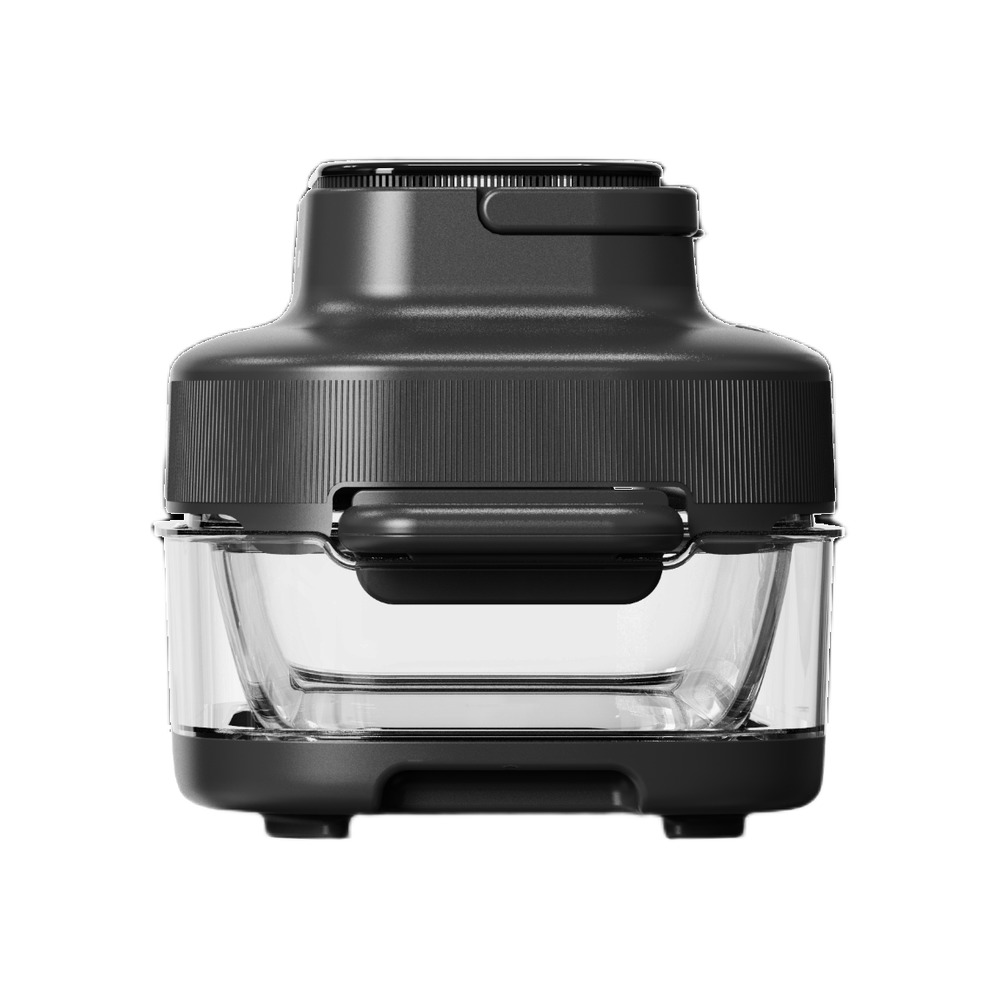
1. Treat cleanability as a primary specification. Removable, dishwasher-safe baskets, integrated grease channels and tool-free disassembly remove the friction that turns a new appliance into a cupboard resident. They also cut return rates — a direct margin lever in cross-border e-commerce.
2. Sell the recipe, not only the hardware. Bundled recipe content, localised cooking curves and one-tap menu programmes convert a one-off hardware sale into an ongoing relationship. In mature Western markets this supports repeat purchase; in emerging markets it shortens the learning curve for first-time buyers.
3. Match capacity ramp to the order book. Depreciation and commissioning costs during ramp-up are a real risk in a flat-volume year. Importers evaluating OEM partners should weigh ramp discipline and order-book alignment alongside unit price.
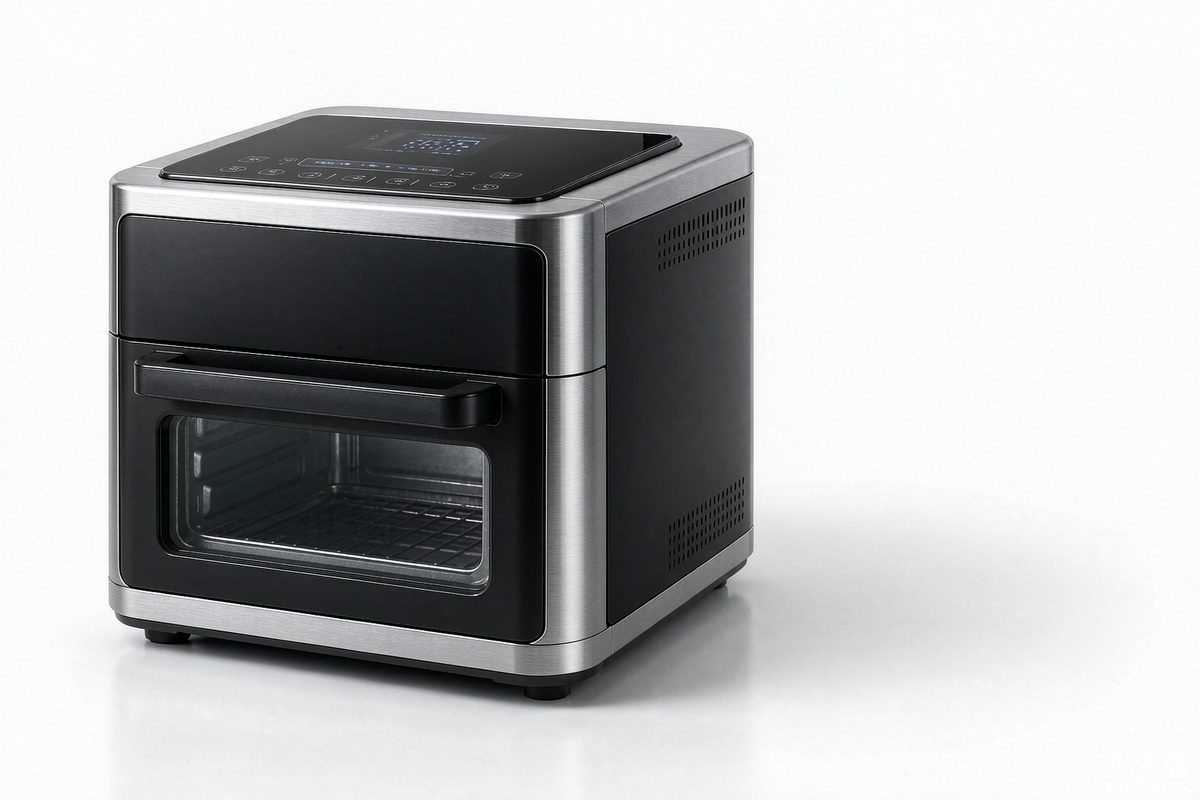
EPRO has supplied air fryers as an OEM/ODM partner since 2012, and the sourcing conversations we see reflect the same shift. Price per unit still matters, but for importers serving markets where a household buys one appliance and expects it to last, three questions now come earlier in the brief: how easy is it to clean, does it ship with recipe content that fits local cuisine, and will the materials survive daily use?
Those are the design priorities we build around — tool-free removable baskets, dishwasher-safe components, durable non-stick systems and localised recipe support — because they are what keeps an appliance on the counter rather than in the cupboard.
The air fryer is graduating from novelty appliance to daily kitchen tool. The brands and manufacturing partners who treat the next 24 months as a usage-economics problem rather than a unit-economics problem will be best placed when the destocking cycle ends.
EPRO is an OEM/ODM partner for air fryers, founded in 2012 and headquartered in China. Discuss your next model with us at sales@eprochina.com.
Tags: airfryer, airfryeridle, airfryeroem, airfryermarket, kitchenappliance, productdesign, cleanability, chinamanufacturing



Privacy Policy | Terms of Service



 English